The Information Age and the Path of Connectivity: Understanding the Concepts That Define Industry 4.0

A great deal is said about this new trend of the information age. Business owners are bound to invest in what is new, or they will be putting their business at risk against more agile and modernized competitors that benefit from greater performance.
A brief history of industry
Industry was born from a technological revolution in the 14th century, with the invention of the steam engine. It reinvented itself with Fordism and other shop-floor production techniques and, more recently, shocked the world with the introduction of robotics and automation into parts production. Now, with the new advances of Information Technology, we believe we are ready to take another evolutionary step in industrial history.
The evolution of storage and information
There was a time when data was stored on tapes, reels and other technologies, meaning it was not even digitized. Readings were analog and control was carried out through actuators that were also analog, usually not automated.
Then devices evolved. More digital logic and fewer coils and relays began to be adopted, but the focus of industrial automation was still entirely local. The first step toward industrial integration came with the emergence of local networks and, with them, the possibility of verticalizing data. This major evolution allowed information to be exchanged between manufacturing layers: shop floor, IT, management and planning began to share and provide data among themselves, in what became known as the CIM model (Computer Integrated Manufacturing).
Internet of Things, Big Data and Artificial Intelligence
With the idea of the Internet of Things, every device (actuator, sensor, smartphone, refrigerator, television and countless other examples) is connected to the network transmitting information in real time. This data must be stored in a completely new type of database, with non-relational Big Data storage, which also enables the development of the much-discussed Artificial Intelligence.
What is Industry 4.0
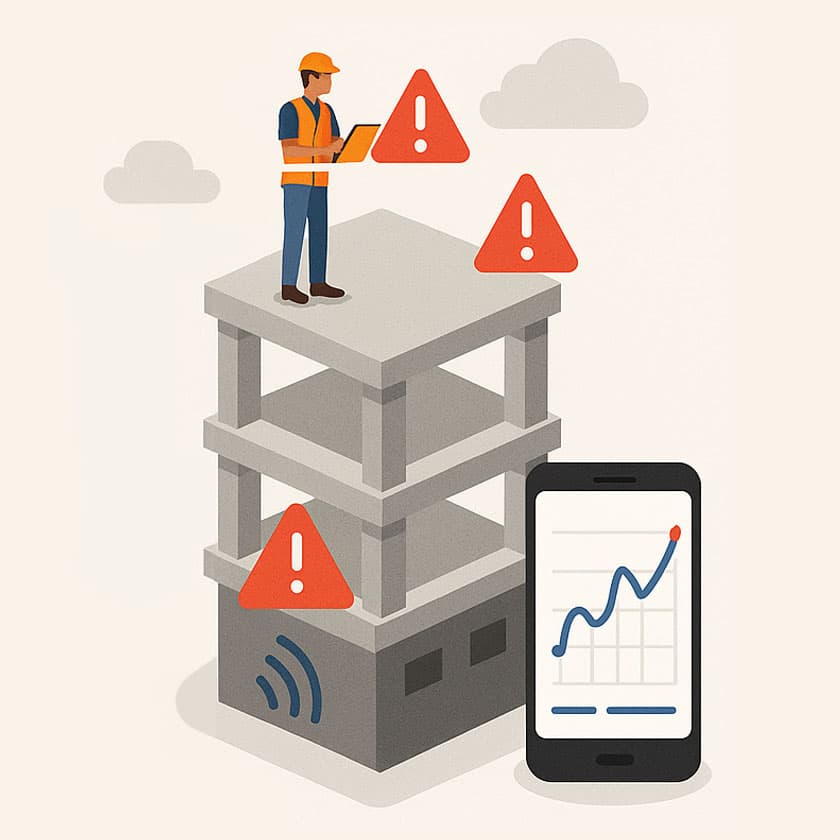
Industry 4.0 adds a new layer to the manufacturing model so that we can truly have fully digital production. This new layer is, in fact, an explosion of new technologies and concepts that open up countless possibilities, many of them still unexplored.
Integration, real time (Real-Time), Internet of Things, object orientation, cloud computing, Big Data, Artificial Intelligence, Blockchain. One could spend hours listing the technologies being incorporated into Industry 4.0 and into everyday human life, across all spheres, often imperceptibly.
The next posts will address topics related to Industry 4.0, such as the Internet of Things, Cloud Computing and Big Data. These are three new concepts accompanied by a great deal of technology and expectation, and they can also be considered the watchwords of the industry of the future.