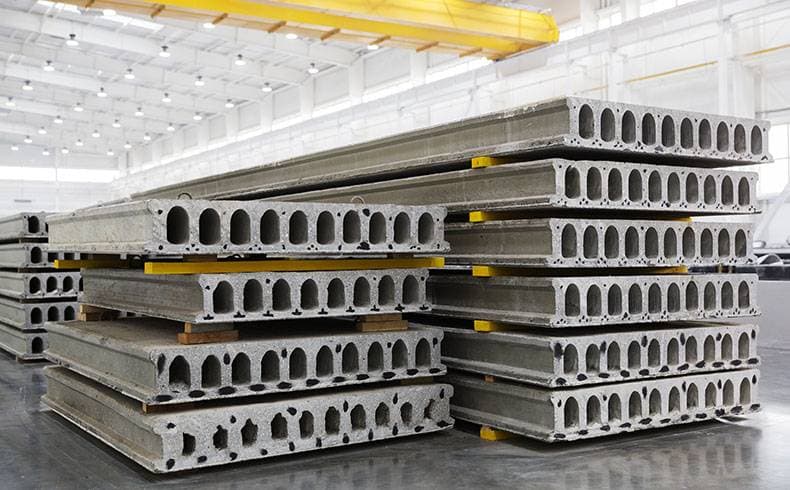
The importance of logistics for precast construction
Precast concrete elements bring speed and efficiency to construction, but their large dimensions make transport logistics a challenge, especially in urban areas. Good planning ensures materials reach the site safely and on schedule.
Main logistics challenges
Transporting precast structures requires assessing interference from power transmission lines, the width of the access roads to the site and time restrictions for heavy vehicles, factors that directly affect planning.
How to optimize transport
The first step is a technical site visit to identify restrictions, check regulations and plan alternative routes. It is essential to comply with standards such as the CONTRAN axle-load law and ABNT NBR 15883-1:2015 for securing the pieces. At the factory, pieces are arranged to optimize loading, with correct fastening and prevention of shifting in transit.
Safety and sustainability
The Precast Concrete Structures Assembly Manual, by Abcic, recommends inspecting cables, straps and chains and re-tightening the fastenings every 50 km or every hour of travel. Choosing suitable vehicles, routes and times reduces the carbon footprint, and using precast elements minimizes waste, noise and material loss on site.
Logistics that make the difference
On projects with roads in operation, precast is the safest and most efficient solution, reducing environmental impact, timelines and risks. That is why efficient logistics are key to the success of precast construction.